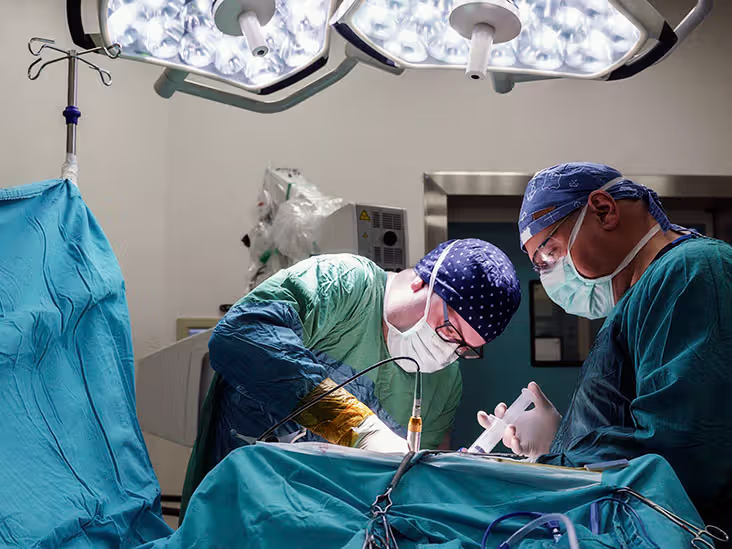
If your parent has just been told they have a brain tumor, the first question is usually whether an operation can be avoided. Brain tumor treatment without surgery in India is possible for some tumors, through observation, radiation, radiosurgery or medicines, but not for all.
Many tumors are best treated with surgery, and the right choice depends on the exact type and behaviour of the tumor, not on the word “tumor” alone.
Quick answer: Some slow-growing, symptom-free tumors, such as certain meningiomas, can be safely watched with repeat MRI scans. Others are treated with radiation, radiosurgery or medicines, often after a biopsy or partial removal. Fast-growing or symptomatic tumors usually cannot wait, so confirm the diagnosis, type and grade before choosing.
In this guide
- What “without surgery” realistically means
- Step one: confirm the diagnosis before choosing anything
- Step two: type, grade and location decide the options
- When watching is reasonable, and when it is not
- Why surgery often comes first even when radiation follows
- How a tumor board makes the decision
- Cost and time: what to ask before starting
- Claims we would steer you away from
- Frequently asked questions
- Book a review before you commit to any path
- Related guides
What “without surgery” realistically means
“Without surgery” rarely means “without a surgeon”. Even when the final treatment is radiation or medicine, a neurosurgeon is often involved first, to take a tissue sample, to relieve pressure, or simply to judge whether an operation is needed at all. We would rather you hear this now than feel misled later.
The non-surgical options are different tools for different jobs:
- Observation: repeat MRI at planned intervals, for tumors that are small, slow-growing and causing no problems.
- Radiotherapy: external beam radiation given over several days to weeks, used for many tumor types, often after surgery.
- Radiosurgery (such as Gamma Knife): highly focused radiation, usually in one to a few sessions, for small, well-defined tumors and some deep-seated ones.
- Chemotherapy, targeted or hormonal medicines: used mainly for gliomas, lymphomas and certain other tumors, usually alongside or after other treatment.
- Supportive medicines: steroids to reduce swelling and anti-seizure drugs. These control symptoms; they do not treat the tumor itself.
Step one: confirm the diagnosis before choosing anything
No treatment path should be chosen from a scan report alone. A report saying “mass lesion” or “space-occupying lesion” is a description, not a diagnosis. Some lesions that look like tumors turn out to be abscesses, tuberculomas or metastases from elsewhere in the body, and those are treated very differently.
Ask for the actual MRI images on a disc or portal, not just the report, and have them reviewed by a neurosurgeon. Where imaging cannot settle the question, a tissue sample is needed. Radiation and chemotherapy decisions for many tumors depend on that result. Ask the treating team to write down three things: the suspected or confirmed tumor type, its grade, and the reason for the recommended path.
Step two: type, grade and location decide the options
Type and grade tell us how a tumor behaves; location tells us what treatment can reach it safely. A low-grade tumor in a quiet area behaves very differently from a high-grade one near speech or movement centres.
| Situation | Often considered | Why |
|---|---|---|
| Small meningioma, no symptoms, found by chance | Observation with scheduled MRI | Often grows very slowly or not at all |
| Small meningioma or schwannoma that is growing | Radiosurgery or surgery | Well-defined edges suit focused radiation |
| Large tumor pressing on the brain | Surgery, then review for radiation | Pressure must be relieved |
| Glioma (infiltrating tumor) | Surgery to the safe extent, then radiation and chemotherapy | Tissue is needed for grading and molecular tests |
| Suspected lymphoma | Biopsy, then chemotherapy-based treatment | Extensive removal is generally not the aim |
| Metastasis from another cancer | Radiosurgery, radiotherapy, or surgery for a single large lesion | Depends on number, size and the primary cancer |
These are general patterns, not a recommendation for any individual; the decision depends on imaging, tissue findings, symptoms and your parent’s overall health.
When watching is reasonable, and when it is not
A benign, slow-growing tumor without symptoms can often be watched safely, and an operation done too early carries risks without benefit. This is common with small meningiomas found during a scan for something unrelated. Observation is a plan, not neglect: it means a baseline MRI, a repeat scan usually within a few months, then at longer intervals if stable.
Waiting is risky when any of these appear, and they need prompt medical attention:
- Headache that is worsening, wakes the person from sleep, or comes with vomiting
- A first seizure, or seizures becoming more frequent
- New weakness on one side, difficulty speaking, or unsteady walking
- Falling vision or double vision
- Drowsiness, confusion or sudden personality change
- Sudden severe headache, which can signal bleeding
Go to an emergency department for those last signs rather than waiting for an appointment. Our guide to the warning signs of a brain tumor lists them in more detail.
Why surgery often comes first even when radiation follows
Surgery does three jobs that medicines and radiation cannot: it gives a definite diagnosis, it removes pressure, and it reduces the amount of tumor left for later treatment. A common mistake is to refuse a biopsy or operation to “avoid risk”, then start radiation or chemotherapy on a guess. That can mean a poorly matched treatment and lost time.
Age alone is not the barrier families fear. Fitness, other illnesses and tumor location matter more; see our note on neurosurgery in elderly patients.
How a tumor board makes the decision
A tumor board is a joint review in which the neurosurgeon, neuro-oncologist, radiation oncologist and radiologist examine the same scans and reports and agree a plan. It matters because each specialist naturally sees the problem through their own tool.
At Bangalore Neuro Centre, the neurosurgeon’s role is to say whether surgery is needed, and to coordinate with oncology and radiation colleagues where radiotherapy, radiosurgery or chemotherapy is the better route. We do not provide those treatments ourselves, and we would not suggest an operation that the review does not support.
Cost and time: what to ask before starting
Non-surgical treatment is not automatically cheaper or quicker. Observation costs repeated MRIs and visits over years. Radiosurgery is a short course but a specialised one. Conventional radiotherapy can mean daily visits for several weeks, and chemotherapy runs for months. Costs vary with the hospital, the technology, the number of sessions, medicines and insurance coverage, so ask for a written estimate. Ask also:
- What exactly is the diagnosis, and has it been confirmed by tissue or only by scan?
- What happens if we wait three months?
- What are the side effects, and how will response be measured?
- Who coordinates care if the plan changes?
For the surgical side of the comparison, see brain tumor surgery cost in Bangalore.
Claims we would steer you away from
Be wary of any clinic that promises guaranteed shrinkage, a “natural” or herbal cure, or a treatment available only at that one place. There is no proven substitute for imaging-based diagnosis and standard treatment. Complementary approaches for comfort are one thing; replacing treatment with them while a tumor grows is another, and the lost months cannot be recovered.
Frequently asked questions
Can a tumor shrink on its own?
Rarely, and some lesions mistaken for tumors, such as infections, can improve with the right medicine. That is why diagnosis comes first.
Is radiosurgery the same as having an operation?
No. There is no incision. It delivers focused radiation, and its effect on the tumor usually appears over months, not days.
Should we get a second opinion?
Yes, if the diagnosis is unclear, if surgery has been advised without discussion of alternatives, or if you have been told nothing can be done. Bring the images, not only the report.
Can steroids alone treat the tumor?
No. They reduce swelling and ease symptoms temporarily, and long use has side effects.
Book a review before you commit to any path
If your parent has a brain tumor diagnosis, a neurosurgical review of the MRI can tell you whether watching, radiation, medicines or surgery is the sensible route. Bring all scans, reports and prescriptions; our first visit guide explains what to expect. Dr. Shyam D and the team at Bangalore Neuro Centre, Manipal Hospital Electronics City, can be reached on +91 63802 71088 to arrange a consultation.
Related guides
- Headache vs. migraine vs. brain tumor
- How to choose a neurosurgeon in Bangalore
- Endoscopic skull base surgery explained
This article explains general medical information . It is not a diagnosis — please see a qualified doctor about your own symptoms.