Pituitary tumors are strange in one important way: they often announce themselves not with a headache or anything obviously “brain-related,” but with a scattered set of symptoms that seem to belong to completely different problems. Unexplained fatigue. Weight that won’t shift. Vision that’s quietly narrowing. Irregular periods, low libido, or milk production with no pregnancy. People frequently see three or four different specialists before anyone connects the dots back to a small gland at the base of the brain.
This guide explains what pituitary tumors are, the signs worth taking seriously, and when scattered symptoms are worth investigating as a single underlying cause.
What the pituitary gland actually does
The pituitary is a pea-sized gland sitting at the base of the brain, just behind the bridge of your nose. Despite its size, it’s often called the “master gland” — because it controls most of the body’s other hormone-producing glands.
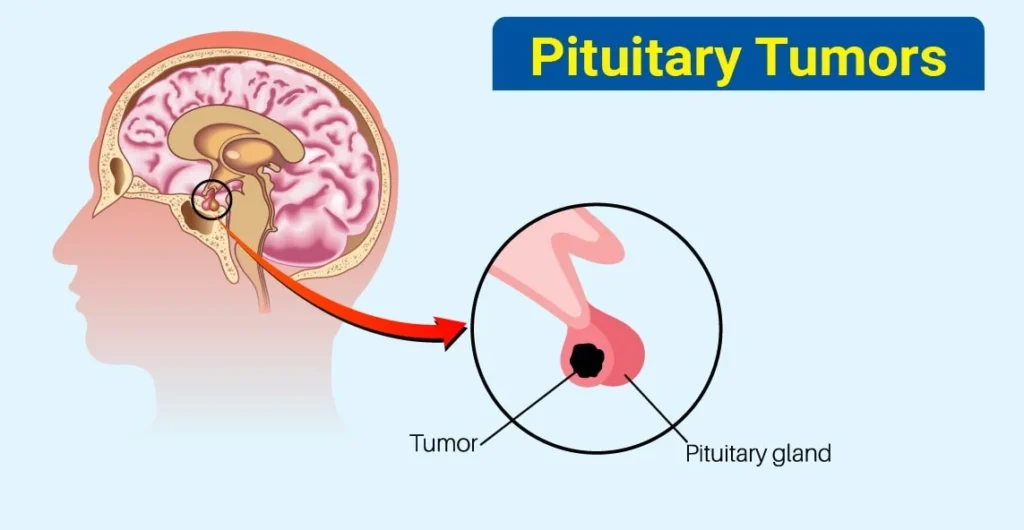
It regulates, directly or indirectly:
- Growth
- Metabolism and energy (via the thyroid)
- The body’s stress response (via the adrenal glands)
- Reproduction, periods, and fertility
- Milk production
- Water balance in the body
Because it sits at the crossroads of so many hormonal systems, a tumor here can disrupt almost any of them — which is exactly why the symptoms are so varied and so easy to misattribute.
What is a pituitary tumor?
A pituitary tumor is an abnormal growth in the gland. The overwhelming majority are benign (non-cancerous) growths called pituitary adenomas. They don’t spread to other parts of the body — but they can still cause real problems in two distinct ways:
- By producing too much of a hormone — a “functioning” tumor floods the body with a hormone it doesn’t need.
- By pressing on nearby structures — a “non-functioning” tumor may produce no hormones itself, but as it grows it pushes on the optic nerves, the healthy pituitary tissue, or the brain around it.
Understanding which type is at play is central to understanding the symptoms.
The two ways a pituitary tumor causes symptoms
1. Symptoms from too much hormone
When a tumor overproduces a specific hormone, the effects depend on which one:
- Prolactin (prolactinoma) — the most common functioning type. In women: irregular or absent periods, milk production without pregnancy, and difficulty conceiving. In men: low libido, erectile difficulty, and sometimes breast tenderness.
- Growth hormone (acromegaly) — gradually enlarging hands, feet, and facial features; rings and shoes no longer fitting; a deepening voice; joint aches. Because it’s so gradual, it’s often missed for years.
- ACTH (Cushing’s disease) — weight gain concentrated in the face and trunk, easy bruising, purple stretch marks, high blood pressure, and mood changes.
- TSH (thyroid-stimulating) — rarer; causes symptoms of an overactive thyroid, such as weight loss, palpitations, and anxiety.
2. Symptoms from pressure
As a tumor grows, it can press on structures around the gland — and this produces a very recognisable cluster:
- Vision changes, classically a loss of peripheral (side) vision. The optic nerves cross right above the pituitary, so a growing tumor pushes on them. People often describe bumping into things or not seeing cars in the next lane before they realise their side vision has narrowed.
- Headaches, often behind the eyes or forehead.
- Symptoms of hormone deficiency — as the tumor crowds out the healthy gland, it can reduce normal hormone output, causing fatigue, low mood, cold intolerance, low libido, and a general “running on empty” feeling.
The warning signs worth taking seriously
Any one of these alone usually isn’t a pituitary tumor — most have far more common explanations. But a combination of them, especially when they don’t add up to any single obvious cause, is worth investigating:
- Loss of side (peripheral) vision, or new visual field problems
- Persistent unexplained fatigue and low energy
- Irregular, absent, or changed periods (not explained by other causes)
- Milk production when not pregnant or breastfeeding
- Reduced libido or erectile difficulty
- Gradual enlargement of hands, feet, or facial features
- Unexplained weight gain, especially around the face and abdomen
- Persistent headaches combined with any of the above
The pattern that should prompt investigation is several hormonal or visual symptoms with no unifying diagnosis — that’s precisely the situation where a small gland at the base of the brain deserves a look.
A rare emergency: pituitary apoplexy
Occasionally, a pituitary tumor bleeds or loses its blood supply suddenly. This causes a sudden severe headache, often with vision loss, double vision, nausea, and vomiting. This is a medical emergency and needs immediate care — if this happens, don’t wait it out.
How pituitary tumors are diagnosed
If a pituitary problem is suspected, diagnosis usually involves three things working together:
- Blood tests to measure hormone levels — checking both for excess and for deficiency.
- An MRI scan of the brain focused on the pituitary, which shows the tumor’s size and its relationship to the optic nerves and surrounding structures.
- A visual field test if there’s any suggestion of pressure on the optic nerves.
This is genuinely a team effort — an endocrinologist (hormone specialist) and a neurosurgeon often assess these cases together, because treatment depends on both the hormone picture and the tumor’s size and position.
How pituitary tumors are treated
Treatment is tailored to the tumor type, size, and symptoms — and, importantly, not every pituitary tumor needs surgery.
- Medication — some tumors, particularly prolactinomas, can often be controlled with medication alone, shrinking the tumor and normalising hormones without an operation.
- Surgery — for tumors pressing on the optic nerves, or those overproducing hormones that medication can’t control, surgery is the main treatment. Most pituitary tumors are removed through the nose using endoscopic skull base surgery — no incision on the head, no opening of the skull, and typically a faster recovery. You can read more on our skull base surgery page.
- Radiotherapy — occasionally used for tumors that can’t be fully removed or that come back.
- Monitoring — small, non-functioning tumors causing no symptoms are sometimes simply watched with periodic scans.
The reassuring reality is that most pituitary tumors are benign and highly treatable — and when caught before they’ve caused permanent vision loss, outcomes are generally very good.
When to see a specialist
Consider getting assessed if you have:
- New or worsening loss of side vision — this one warrants prompt attention
- A cluster of unexplained hormonal symptoms that no single diagnosis explains
- Symptoms of acromegaly (enlarging hands, feet, facial features) or Cushing’s
- Persistent fatigue and low libido alongside headaches or visual changes
A GP or endocrinologist can order the initial hormone tests and MRI; if a tumor is found, a neurosurgeon experienced in pituitary surgery will advise whether medication, surgery, or monitoring is the right path.
Frequently asked questions
The vast majority are benign (non-cancerous) growths called adenomas. They don’t spread elsewhere in the body, though they can cause problems by overproducing hormones or pressing on nearby structures. Cancerous pituitary tumors are very rare.
Yes. Because the optic nerves sit directly above the gland, a growing tumor can press on them and cause loss of peripheral (side) vision. This is one of the most important warning signs and needs prompt assessment.
Do all pituitary tumors need surgery? No. Some, especially prolactinomas, are controlled with medication. Small tumors causing no symptoms may just be monitored. Surgery is used mainly when a tumor presses on the optic nerves or overproduces hormones that medication can’t control.
How is pituitary tumor surgery done? Most are removed through the nose using endoscopic endonasal surgery — there’s no external incision and no need to open the skull, which usually means a quicker recovery than traditional brain surgery.
Is pituitary tumor treatment available in Bangalore? Yes. Diagnosis and treatment, including endoscopic pituitary surgery, are available in Bangalore, typically with an endocrinologist and neurosurgeon working together.
Get an expert opinion in Bangalore
If you have a cluster of unexplained hormonal symptoms, changes in your side vision, or an MRI that’s flagged a pituitary tumor, a clear assessment can bring real answers. Book a Consultation · Send Reports on WhatsApp · +91 63802 71088
This article is for general information and is not a substitute for professional medical advice. Always consult a qualified doctor about your specific symptoms.
1 Comment