A pinched nerve in the lower back is one of the most common — and most alarming — spine problems people experience. The pain can shoot down the leg, the foot can tingle or go numb, and it’s natural to assume the worst and wonder if you’ll need surgery. Here’s the reassuring truth most people don’t hear: the large majority of pinched nerves in the lower back settle on their own with time and simple treatment. But there are specific situations where surgery genuinely helps, and a few red flags that mean you shouldn’t wait. This guide explains the difference.
What “pinched nerve” actually means
A pinched nerve — the medical term is a compressed or impinged nerve root — happens when something presses on one of the nerves as it exits the spine in your lower back. The usual culprits:
- A herniated (slipped) disc — the most common cause. The soft cushion between two vertebrae bulges or ruptures and presses on a nearby nerve.
- Spinal stenosis — age-related narrowing of the spinal canal (covered in our lumbar spinal stenosis guide).
- Bone spurs — bony overgrowths from spinal arthritis.
- Thickened ligaments crowding the nerve space.
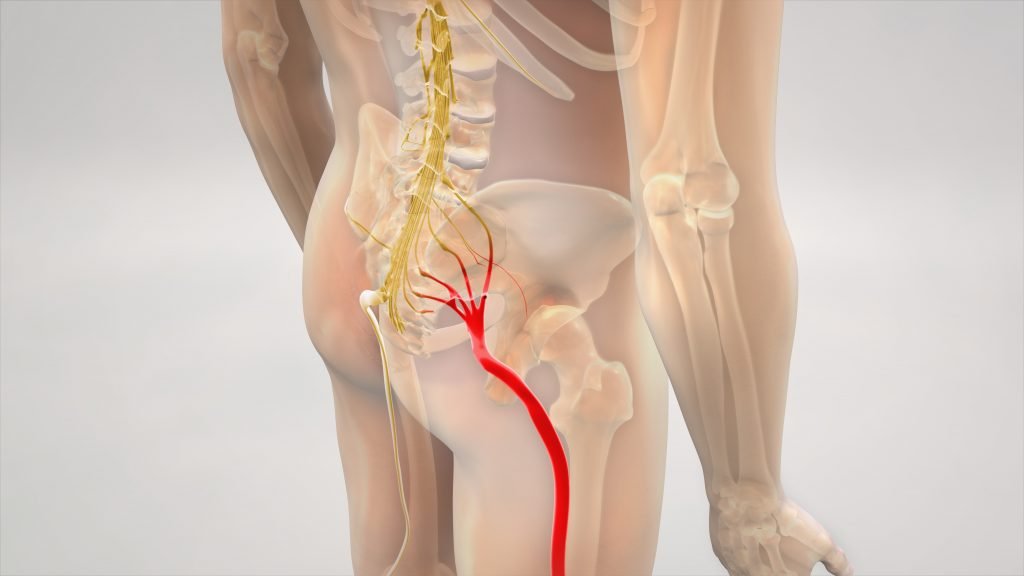
When the compressed nerve is one that runs down the leg, the result is often sciatica — pain that travels from the lower back or buttock down the back of the leg.
What it feels like
A pinched nerve in the lower back typically causes some combination of:
- Sharp, burning, or electric pain radiating from the lower back or buttock down the leg
- Pain that may be worse than the back pain itself
- Tingling or “pins and needles” in the leg or foot
- Numbness along a specific band of the leg or foot
- Weakness in the leg or foot in more significant cases
- Pain that worsens with sitting, coughing, sneezing, or bending
The hallmark is that the symptoms follow the path of the nerve — travelling down the leg in a line, rather than staying as a general ache in the back.
The good news: most heal without surgery
This is the part worth holding onto if you’re frightened. The majority of pinched nerves from a herniated disc improve substantially within 6 to 12 weeks with non-surgical treatment. The body often reabsorbs the herniated disc material over time, and the inflammation around the nerve settles.
First-line treatment includes:
- Staying gently active — prolonged bed rest actually slows recovery
- Physiotherapy — targeted exercises and movement
- Pain-relieving and anti-inflammatory medication
- Nerve-specific medications for burning or electric nerve pain
- Epidural steroid injections — for stubborn cases, to reduce inflammation around the nerve
Given time and the right approach, most people get back to normal without ever needing an operation.
The red flags: when NOT to wait
While most pinched nerves are safe to manage patiently, a few symptoms are genuine emergencies. Seek medical care immediately if you have:
- Loss of bladder or bowel control, or numbness around the groin, inner thighs, or buttocks (the “saddle” area)
- Rapidly worsening or severe weakness in the leg or foot — for example, a foot that starts dragging or can’t lift
- Symptoms in both legs at once
These can indicate a serious condition called cauda equina syndrome, which needs urgent surgery to prevent permanent damage. This is rare — but it’s the one situation where waiting is genuinely dangerous.
When surgery is the right step
Outside of emergencies, surgery for a pinched nerve becomes the reasonable choice when:
- Severe leg pain persists despite 6–12 weeks of proper conservative treatment
- There’s significant or progressive muscle weakness
- The pain is so disabling that quality of life has dropped substantially
- Imaging clearly shows a compression that matches your symptoms
The key principle: surgery is guided by how you’re doing, not just by what the scan shows. Many people have disc bulges on MRI and no symptoms at all — so the decision rests on the combination of a matching scan and a problem that isn’t resolving.
What the surgery involves
The most common operation for a pinched nerve from a herniated disc is a discectomy — removing the fragment of disc that’s pressing on the nerve to free it up. When the cause is stenosis or bone, a decompression reopens space around the nerve.
Both are frequently done minimally invasively — through a small incision, using a tubular retractor that parts the back muscles rather than cutting them, with a microscope or endoscope for a magnified view. For a straightforward single-level pinched nerve, this typically means less pain and a faster recovery than open surgery. You can read more on our minimally invasive spine surgery page, and see how the approaches compare in our minimally invasive vs open spine surgery guide.
Relief of the leg pain after a well-indicated discectomy is often rapid — many people wake up from surgery noticing the shooting leg pain is already gone.
Recovery
For a minimally invasive discectomy:
- Often a same-day or overnight stay
- Walking within hours
- Back to desk work commonly within 1–3 weeks
- Avoiding heavy lifting, bending, and twisting in the early weeks
- Physiotherapy to rebuild strength and reduce the chance of recurrence
Frequently asked questions
Most do. The majority of pinched nerves from a herniated disc improve within 6–12 weeks with staying active, physiotherapy, and medication. Surgery is needed only in a minority of cases.
When severe leg pain persists despite weeks of proper treatment, when there’s significant or worsening weakness, or urgently if there’s loss of bladder/bowel control or numbness in the saddle area.
Most commonly a discectomy — removing the disc fragment pressing on the nerve — often done minimally invasively through a small incision, with a quick recovery for straightforward cases
How long should I wait before considering surgery? Generally 6–12 weeks of conservative treatment, unless red-flag symptoms (severe weakness, loss of bladder/bowel control) appear — those need immediate care, not waiting.
Is pinched nerve surgery available in Bangalore? Yes. Assessment and both minimally invasive and open procedures are available in Bangalore at equipped neurosurgical centres.
Get an expert opinion in Bangalore
If leg pain, numbness, or weakness from a pinched nerve isn’t settling — or if you’re worried about red-flag symptoms — a proper assessment can tell you whether to keep managing it or consider surgery. Book a Consultation · Send Reports on WhatsApp · +91 63802 71088
This article is for general information and is not a substitute for professional medical advice. Loss of bladder or bowel control, or rapidly worsening weakness, needs immediate medical care.
1 Comment