Medically reviewed by Dr. Shyam D, M.Ch (Neurosurgery), FACS, IFAANS — Consultant Neurosurgeon, Manipal Hospital Electronics City
If you have been told you “need a fusion” for your lower back, it is natural to feel worried. Spinal fusion sounds like a big operation, and for many years it was. Today, minimally invasive lumbar fusion lets a spine surgeon stabilise the lower back through small incisions, with less muscle damage, less blood loss and a faster return to normal life.
This guide explains who actually needs a lumbar fusion, how the minimally invasive approach works, what recovery looks like week by week, and what results you can realistically expect.
What Is Lumbar Fusion?
The lumbar spine is the lower part of your back, made up of five vertebrae (L1 to L5) separated by cushioning discs. Lumbar fusion permanently joins two or more of these vertebrae so they heal into one solid bone. This stops painful movement at an unstable or worn-out segment and takes pressure off the nerves.
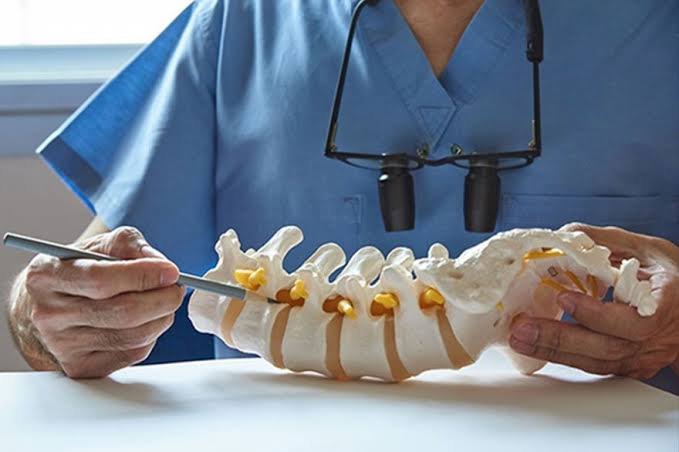
A fusion usually involves three steps:
- Decompression — removing bone, ligament or disc material that is pinching the nerves
- Stabilisation — placing screws and rods to hold the vertebrae firmly in position
- Bone grafting — placing a cage filled with bone graft between the vertebrae so they grow together over the following months
What Makes It “Minimally Invasive”?
In traditional open fusion, the surgeon makes a long incision down the middle of the back and strips the muscles away from the spine to reach it. Those muscles take a long time to heal and are a major source of pain after surgery.
In minimally invasive spine surgery (MISS), the surgeon works through small incisions using tubular retractors that gently separate the muscles instead of cutting them. Screws are placed through the skin under real-time X-ray guidance, and an operating microscope or endoscope gives a magnified view of the nerves.
Common minimally invasive fusion techniques include:
- MIS-TLIF (Transforaminal Lumbar Interbody Fusion) — the most widely used technique, done from the back through a small tubular corridor
- OLIF / LLIF (Oblique or Lateral Lumbar Interbody Fusion) — the disc is approached from the side, avoiding the back muscles entirely
- Percutaneous pedicle screw fixation — screws and rods placed through stab incisions of about 1–2 cm each
For a detailed comparison of the two approaches, read our guide on minimally invasive vs open spine surgery.
Who Needs Minimally Invasive Lumbar Fusion?
Fusion is not a treatment for ordinary back pain. It is recommended when a specific segment of the spine is unstable or mechanically failing, and when that problem matches your symptoms and scans.
Conditions where fusion is often recommended
- Spondylolisthesis — one vertebra has slipped forward over the one below, causing back pain and leg pain (degenerative or isthmic type)
- Lumbar spinal stenosis with instability — narrowing of the spinal canal along with abnormal movement on flexion-extension X-rays. Learn more about lumbar spinal stenosis
- Recurrent disc herniation — the same disc has herniated again after a previous surgery, especially more than once
- Spinal instability after trauma, infection or tumour surgery
- Severe degenerative disc disease in carefully selected patients whose pain clearly comes from one level and has not improved with long-term non-surgical care
- Some cases of adult degenerative scoliosis causing nerve compression
When fusion is usually NOT needed
Many patients who come to us for a “second opinion on fusion” turn out not to need one:
- A simple slipped disc usually needs only a microdiscectomy or endoscopic discectomy, not a fusion. See Slipped Disc — Do You Really Need Surgery?
- Stenosis without instability can often be treated with a decompression alone, which preserves movement
- Back pain without nerve compression or instability is best managed first with physiotherapy, posture correction, weight management and medication
Our principle: surgery is recommended only when it is genuinely the best option. If a smaller operation will solve the problem, that is what we advise.
Signs it may be time to see a spine surgeon
- Leg pain, numbness or tingling (sciatica) lasting more than 6–8 weeks despite treatment
- Being unable to walk or stand for long without leg pain that eases on sitting or bending forward
- Back pain that worsens on movement and feels like the back is “giving way”
- Weakness in the leg or foot, or foot drop
- Emergency signs: loss of bladder or bowel control, or numbness around the genitals — seek care immediately
If you have pinched nerve symptoms in the lower back, an early assessment helps avoid permanent nerve damage.
How the Decision Is Made
Before recommending a fusion, your neurosurgeon will usually review:
- MRI of the lumbar spine — shows the nerves, discs and the degree of compression
- Standing flexion-extension X-rays — show whether a segment moves abnormally (instability)
- CT scan — sometimes needed to study bone anatomy and plan screw placement
- Bone density (DEXA scan) — important in older patients, as weak bones affect screw strength
- Your symptoms and examination — the scan findings must match where your pain and weakness are
You can send your MRI reports on WhatsApp for a prompt second opinion before deciding on surgery.
What Happens on the Day of Surgery
- Anaesthesia — the operation is done under general anaesthesia
- Positioning and X-ray guidance — you lie face down; live X-ray (fluoroscopy) or navigation pinpoints the exact level
- Small incisions — typically 2–4 small cuts instead of one long one
- Decompression — the pinched nerves are freed under the microscope
- Cage and graft — the worn disc is cleared and replaced with a cage filled with bone graft
- Screws and rods — inserted through the skin to lock the segment in place
- Closure — small incisions are closed, often with dissolvable stitches
A single-level minimally invasive fusion typically takes around 2–4 hours, depending on the complexity of the case.
Recovery After Minimally Invasive Lumbar Fusion
Every patient heals differently, but this is a typical timeline for a single-level fusion:
| Time after surgery | What to expect |
|---|---|
| Day 0–1 | Walking with support, usually within 24 hours. Leg pain often improves quickly once the nerve is freed |
| Day 2–4 | Discharge home for most patients. Walking independently, managing stairs |
| Weeks 1–2 | Short daily walks, gradually increasing. Wound check and suture review |
| Weeks 2–6 | Return to desk or work-from-home jobs for many patients. Avoid bending, lifting and twisting |
| Weeks 6–12 | Structured physiotherapy for core strength. Driving short distances once off strong painkillers and cleared by your surgeon |
| Months 3–6 | Return to most daily activities and light exercise. Physical or manual jobs resume gradually |
| Months 6–12 | The bone graft solidifies into a solid fusion, confirmed on X-ray or CT |
Recovery tips that make a real difference
- Walk every day — walking is the single best exercise after spine surgery
- Stop smoking — smoking significantly reduces the chance of the bone fusing
- Avoid the BLT — no Bending, Lifting or Twisting in the early weeks
- Sit well — use a chair with good back support and take breaks every 30–45 minutes, especially if you work at a desk
- Eat for bone healing — adequate protein, calcium and vitamin D
- Do not skip follow-ups — X-rays at planned intervals confirm the fusion is healing correctly
Results: What Can You Realistically Expect?
Minimally invasive lumbar fusion has been studied extensively, and when patients are carefully selected, outcomes are encouraging.
Compared with open fusion, minimally invasive fusion generally offers:
- Less blood loss and lower need for transfusion
- Less post-operative pain and lower painkiller requirement
- Shorter hospital stay
- Earlier walking and faster return to work
- Smaller scars and less muscle damage
- Fusion rates that are comparable to open surgery
What improves most: leg pain caused by nerve compression usually improves the most, and often quickly. Back pain from instability also tends to improve as the segment fuses, though more gradually.
Honest expectations: fusion aims to reduce pain and improve function — not to give you a “brand-new spine”. Some stiffness at the fused level is normal, and most people do not notice it in daily life. The best results are seen when the scan findings clearly match the symptoms, which is why careful assessment before surgery matters so much.
Risks and Possible Complications
All surgery carries some risk. With minimally invasive techniques, many risks are lower, but you should know about them:
- Infection (lower with small incisions)
- Bleeding
- Nerve irritation or injury (rare)
- Dural tear (a small leak of spinal fluid, usually repaired during surgery)
- Screw loosening or failure of fusion (non-union), more likely in smokers and people with osteoporosis
- Adjacent segment disease — extra stress on the levels above or below the fusion, which may cause problems years later
Your surgeon will explain how these risks apply to your specific case.
For general patient information on spinal fusion, see MedlinePlus — Spinal Fusion and the American Association of Neurological Surgeons.
Why Choose Bangalore Neuro Centre for Lumbar Fusion?
Dr. Shyam D is an internationally fellowship-trained neurosurgeon with over a decade of experience in brain and spine surgery. His spine practice focuses on minimally invasive spine surgery — smaller incisions, less muscle damage and a faster return to work.
- M.Ch Neurosurgery with two university gold medals
- FACS (Fellow, American College of Surgeons) and IFAANS
- Advanced training in Japan, the USA (Weill Cornell) and Istanbul
- Honest advice — fusion only when it is truly needed
- Consultations at Manipal Hospital Electronics City, easily reached from HSR Layout, Sarjapur Road, Bommanahalli and Hosur Road
If you are dealing with back pain in Electronics City or have been advised spine surgery elsewhere, a second opinion can give you clarity and confidence.
Frequently Asked Questions
Yes, when performed by an experienced spine surgeon on a carefully selected patient. Smaller incisions and less muscle disruption generally mean less blood loss, lower infection rates and faster recovery than open surgery
How long is the hospital stay after minimally invasive lumbar fusion?
Most patients stay 2–4 days after a single-level fusion. Many are walking within 24 hours of surgery.
When can I return to work after lumbar fusion?
People with desk jobs often return within 2–6 weeks. Jobs involving heavy lifting or physical labour usually need 3 months or more.
Will I lose flexibility after a lumbar fusion?
A single-level fusion causes very little noticeable loss of movement because the remaining levels of the spine compensate. Most patients do not feel restricted in daily activities.
Can I avoid fusion surgery?
Often, yes. Many back and leg pain problems improve with physiotherapy, medication or a smaller surgery such as a discectomy or decompression. Fusion is recommended only when there is clear instability or a structural problem that other treatments cannot fix.
Is lumbar fusion covered by insurance?
Spinal fusion done for a medical reason is generally covered by health insurance in India, subject to your policy terms. Our team can help you with the cashless process at Manipal Hospital Electronics City.
Book a Consultation or Second Opinion
Not sure whether you need a fusion? Get an honest opinion from a fellowship-trained neurosurgeon.
📞 Call / WhatsApp: +91 63802 71088 📍 Manipal Hospital Electronics City, Neeladri Road, Electronics City Phase 3, Bengaluru — 560100
This article is for general information only and does not replace a medical consultation. Treatment decisions should be made after a personal assessment by a qualified spine surgeon.
2 Comments