“How much will it cost?” is usually the second question patients ask after hearing the words spine surgery. The first is “Do I really need it?” — and the honest answer to both depends on exactly what is wrong with your spine.
This guide breaks down the typical cost of minimally invasive spine surgery in Bangalore in 2026, procedure by procedure. It also explains what drives the final bill, how insurance works, and why the cheapest quote is not always the lowest cost once you count recovery time and time away from work.
What Is Minimally Invasive Spine Surgery?
Minimally invasive spine surgery (MISS) treats the same problems as traditional open surgery — slipped discs, nerve compression, spinal stenosis, instability and fractures — but through much smaller incisions.
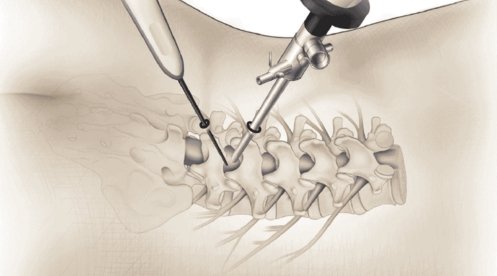
Instead of a long cut and stripping the back muscles off the spine, the surgeon works through:
- Tubular retractors — narrow tubes that gently separate the muscle rather than cutting it
- Operating microscopes — for magnified, well-lit views of the nerves
- Endoscopes — a camera-based approach through an incision often under 1 cm
- Percutaneous screws — placed through small skin punctures under X-ray or navigation guidance
The result for most patients is less muscle damage, less blood loss, less pain after surgery, a shorter hospital stay and a faster return to work. You can read more about the approach on our minimally invasive spine surgery in Bangalore page, and Johns Hopkins Medicine offers a helpful independent overview of minimally invasive spine surgery.
Minimally Invasive Spine Surgery Cost in Bangalore: 2026 Price Table
The table below shows typical ranges at established private and super-speciality hospitals in Bangalore for 2026. These are indicative figures for planning only. Your actual estimate depends on your diagnosis, MRI findings, health, and choices such as room category — and is confirmed only after consultation.
| Procedure | What it treats | Typical cost range | Usual hospital stay |
|---|---|---|---|
| MIS microdiscectomy (tubular) | Slipped disc with leg pain | ₹1,50,000 – ₹3,00,000 | 1–2 days |
| Endoscopic discectomy | Selected slipped discs | ₹2,50,000 – ₹4,50,000 | Same day – 1 day |
| MIS decompression (laminotomy) | Lumbar spinal stenosis | ₹2,00,000 – ₹3,50,000 | 1–3 days |
| MIS-TLIF fusion (1 level) | Instability, spondylolisthesis, recurrent disc | ₹3,50,000 – ₹6,50,000 | 3–5 days |
| Each additional fusion level | Multi-level disease | + ₹1,00,000 – ₹1,50,000 | + 1–2 days |
| Vertebroplasty / Kyphoplasty | Osteoporotic spine fractures | ₹1,50,000 – ₹3,50,000 | 1–2 days |
| Cervical foraminotomy (MIS / endoscopic) | Pinched nerve in the neck | ₹2,00,000 – ₹3,50,000 | 1–2 days |
| ACDF (anterior cervical discectomy & fusion) | Neck disc / cord compression | ₹2,00,000 – ₹4,50,000 | 2–3 days |
| Cervical disc replacement | Neck disc in younger patients | ₹2,50,000 – ₹5,00,000 | 2–3 days |
Add-ons that may apply: computer navigation or robotic assistance can add around 15–25% to the base cost, and intraoperative nerve monitoring is often billed separately.
If your problem is a slipped disc specifically, our detailed guide on slipped disc surgery in Bangalore: cost, success rate and recovery goes deeper into that one condition.
What Is Included in the Cost?
A package or estimate for minimally invasive spine surgery in Bangalore usually covers:
- Surgeon’s and anaesthetist’s fees
- Operation theatre charges and equipment (microscope, endoscope, fluoroscopy)
- Room, nursing care and routine medicines during the stay
- Implants such as screws and cages (for fusion procedures)
- Standard post-operative X-rays and dressings
What is often not included, or billed separately:
- Pre-operative MRI, CT scan, blood tests and ECG
- Consultations before admission
- Extra days in hospital beyond the planned stay
- ICU stay, if needed
- Premium or imported implants beyond the standard option
- Physiotherapy sessions after discharge
- Braces or supports
- Follow-up visits and imaging
Always ask for a written, itemised estimate that lists each of these separately. A clear estimate is the best protection against a surprise bill at discharge.
8 Factors That Affect the Final Cost
Two patients with “the same” surgery can receive very different bills. Here is why.
1. The exact procedure
A simple tubular microdiscectomy costs far less than a fusion with screws and cages. The procedure should be chosen for your spine, not for the price tag — but it is the biggest cost driver.
2. Number of spinal levels
One-level surgery is the baseline. Every additional level adds operating time, implants and often an extra day in hospital.
3. Implants
Fusion procedures need screws, rods and an interbody cage. Implant brands and materials (titanium, PEEK) vary widely in price, and many insurers cap the amount they will pay for implants.
4. Technology used
Endoscopes, navigation systems, robotic guidance and nerve monitoring all add cost. They are valuable in the right case, but not every patient needs every tool.
5. Room category
General ward, twin sharing, single room and suites are priced very differently in Bangalore hospitals. Room category also affects doctor visit charges and, importantly, insurance claims (see below).
6. Length of stay
Minimally invasive surgery usually shortens hospital stay — which directly reduces the bill for room, nursing and medication.
7. Your overall health
Diabetes, heart disease, blood thinners, kidney problems or advanced age may need extra tests, specialist opinions or monitoring before and after surgery.
8. Surgeon experience
Experienced surgeons may charge higher professional fees. In practice, experience often lowers total cost by reducing operating time, complications and the risk of repeat surgery.
Minimally Invasive vs Open Spine Surgery: Which Costs Less?
This is one of the most common questions — and the answer surprises many patients.
The upfront hospital bill for minimally invasive surgery can be similar to, or slightly higher than, open surgery, because it uses specialised equipment. But the total cost — including hospital stay, medicines, time off work and recovery — is often lower.
| Factor | Minimally invasive | Traditional open |
|---|---|---|
| Incision size | 1–3 cm | 8–15 cm |
| Muscle damage | Minimal | Significant |
| Blood loss | Low | Higher |
| Hospital stay | 1–3 days (most procedures) | 4–7 days |
| Post-op pain medication | Less | More |
| Return to desk work | 2–4 weeks (non-fusion) | 6–8 weeks |
| Upfront bill | Similar or slightly higher | Similar or slightly lower |
| Total cost incl. lost income | Often lower | Often higher |
For a working professional in Bangalore, two to four extra weeks away from work can cost more than any difference in the hospital bill. For a detailed clinical comparison, read minimally invasive vs open spine surgery.
That said, minimally invasive is not right for everyone. Severe deformity, some large tumours, complex revisions and certain infections may still be better treated with open surgery. A good surgeon will tell you honestly which approach suits your spine.
Does Insurance Cover Minimally Invasive Spine Surgery?
In most cases, yes. Medically necessary spine surgery — including minimally invasive and endoscopic procedures — is covered by most Indian health insurance policies. Cashless treatment is generally available at large network hospitals in Bangalore.
Before surgery, check the following with your insurer or TPA:
- Waiting periods — many policies have a 1–4 year waiting period for pre-existing conditions or specific procedures like spine surgery
- Room rent limits — if you choose a room above your eligible category, the insurer may reduce the payout proportionately across the whole bill, not just the room charge
- Implant caps — fusion implants may be covered only up to a fixed amount
- Coverage for advanced technology — some policies need extra justification for robotic or navigation-assisted surgery
- Pre-authorisation — the hospital insurance desk submits this once the surgeon documents why surgery is needed
Government employees and eligible families may also be covered under CGHS, ECHS or ESI, and some patients qualify under the Ayushman Bharat PM-JAY scheme at empanelled hospitals. Check with the hospital’s insurance desk which schemes are accepted for your procedure.
Ways to Manage the Cost Sensibly
- Get the diagnosis right first. Many patients with back pain do not need surgery at all. Before you compare prices, make sure surgery is actually indicated — see our honest guide, Slipped Disc: Do You Really Need Surgery?
- Choose the room category your insurance covers to avoid proportionate deductions.
- Ask whether implants are really needed. A simple decompression without fusion is enough for many stenosis and disc problems.
- Ask about technology honestly. Navigation and robotics help in some cases, but ask what difference they make for your surgery.
- Plan physiotherapy early — good rehabilitation shortens recovery and prevents repeat problems.
- Ask about EMI or medical finance options at the hospital billing desk if you are paying out of pocket.
- Get a second opinion if you have been advised a large fusion operation. It is your right, and a good surgeon will welcome it.
Conditions Commonly Treated with Minimally Invasive Spine Surgery
- Slipped disc (disc prolapse) with sciatica or arm pain
- Pinched nerve in the lower back or neck — see pinched nerve lower back surgery
- Lumbar spinal stenosis causing leg pain on walking — see lumbar spinal stenosis
- Spondylolisthesis (a slipped vertebra) and spinal instability
- Osteoporotic compression fractures in elderly patients
- Selected spinal tumours — see spine and spinal cord tumours
- Selected spinal fractures — see spine trauma fixation
Questions to Ask Before You Agree to Surgery
- Do my MRI findings clearly explain my symptoms?
- Have I tried enough non-surgical treatment?
- Which procedure do you recommend, and why is it right for my spine?
- Is minimally invasive surgery suitable for me — and if not, why?
- Do I need a fusion, or will decompression alone work?
- What exactly is included in the estimate, and what is extra?
- How long will I be in hospital, and when can I return to work?
- How many of these procedures do you perform every year?
For more on evaluating surgeons, read how to choose a neurosurgeon in Bangalore.
Minimally Invasive Spine Surgery at Manipal Hospital Electronics City
Dr. Shyam D is a consultant neurosurgeon at Manipal Hospital Electronics City with over 10 years of experience and more than 3,000 surgical procedures. He completed his M.Ch. in Neurosurgery at Madras Medical College with two university gold medals and trained internationally in Japan, the USA and Türkiye. His spine practice has a strong preference for minimally invasive techniques wherever they are safe and appropriate.
What patients can expect:
- An honest opinion on whether surgery is needed — many patients leave with a non-surgical plan
- Minimally invasive and endoscopic options where your anatomy allows
- A clear, written cost estimate before any decision
- Help with insurance pre-authorisation through the hospital insurance desk
- Direct access — send your MRI reports on WhatsApp for review
Patients travel from Electronics City, HSR Layout, Sarjapur Road, Bommanahalli, Hosur Road and across South Bengaluru.
Want an estimate for your case? Send your MRI report on WhatsApp to +91 63802 71088, or book a consultation with Dr. Shyam D at Manipal Hospital Electronics City.
Frequently Asked Questions
In 2026, minimally invasive spine surgery in Bangalore typically costs between ₹1,50,000 and ₹6,50,000 depending on the procedure. A tubular microdiscectomy usually ranges from ₹1,50,000 to ₹3,00,000, MIS decompression from ₹2,00,000 to ₹3,50,000, and a one-level MIS-TLIF fusion from ₹3,50,000 to ₹6,50,000.
The hospital bill can be similar or slightly higher because of specialised equipment. However, shorter hospital stays, less medication and a faster return to work often make the total cost lower.
Yes. Most Indian health insurance policies cover medically necessary spine surgery, including minimally invasive and endoscopic procedures. Check waiting periods, room rent limits and implant caps in your policy.
Most non-fusion procedures need 1–2 days in hospital, and endoscopic surgery can sometimes be done as a day case. A one-level MIS fusion typically needs 3–5 days.
Why does endoscopic spine surgery cost more?
Endoscopic surgery uses specialised camera systems and single-use instruments, which raise equipment costs. Patients often benefit from a shorter stay and quicker recovery, but it is not suitable for every disc.
Is minimally invasive spine surgery suitable for everyone?
No. It works very well for most slipped discs, stenosis and many fusions, but severe deformity, complex revisions, some tumours and certain infections may need open surgery.
How can I get an accurate cost estimate?
Share your MRI and medical history with your spine surgeon. After a consultation, the hospital can provide a written, itemised estimate based on your exact procedure and room choice.
This article is for general information and does not replace a personal medical consultation. Costs shown are indicative ranges for Bangalore in 2026 and may vary. Please consult a qualified spine surgeon for advice and an estimate specific to your condition.