If your legs ache, tire, or go numb after walking a short distance — and the relief comes the moment you sit down or lean forward on a shopping trolley — there’s a good chance you’re dealing with lumbar spinal stenosis. It’s one of the most common reasons older adults slowly stop walking as far as they used to, often blaming “age” or “knees” when the real problem is in the lower back. The good news: when it needs treating, it’s one of the most rewarding spine conditions to fix, and today it’s frequently done through a small incision.
What is lumbar spinal stenosis?
“Stenosis” simply means narrowing. Lumbar spinal stenosis is a narrowing of the spinal canal in the lower back — the bony tunnel that houses the nerves travelling down to your legs.
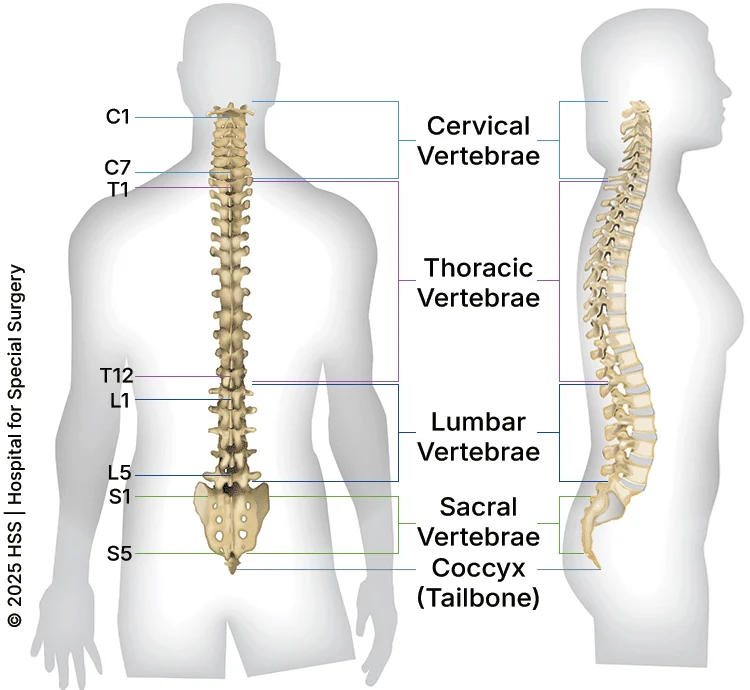
As that space narrows, the nerves get crowded and compressed. That pressure is what produces the leg symptoms. The narrowing usually develops slowly, over years, as part of normal wear-and-tear ageing of the spine:
- Discs lose height and bulge
- Joints thicken and grow bone spurs (arthritis of the spine)
- Ligaments inside the canal thicken
Together these steadily shrink the space around the nerves. That’s why stenosis is mostly a condition of people over 50 — it’s the accumulated effect of decades of spinal ageing.
The tell-tale symptom: pain that eases when you bend forward
Lumbar spinal stenosis has one very characteristic pattern that helps distinguish it from other back problems:
- Leg pain, heaviness, cramping, or numbness that comes on with walking or standing — often in both legs, in the calves, thighs, or buttocks. This is called neurogenic claudication.
- Relief when you sit, bend forward, or lean on something — like a shopping trolley, a kitchen counter, or the handlebars of a bicycle. Bending forward opens up the canal and takes pressure off the nerves.
- Being able to cycle further than you can walk — because you’re bent forward on a bike.
- Back pain may or may not be present; often the leg symptoms bother people far more than their back.
If you find yourself unconsciously leaning on the trolley to get around the supermarket, or stopping to sit on every bench, that “bend-forward relief” pattern is a strong clue.
How it’s diagnosed
Diagnosis combines your symptom pattern with imaging:
- Clinical assessment — your history (especially that walking-and-bending pattern) and a neurological examination.
- MRI scan — the key test. It shows the narrowing clearly and reveals exactly which levels and nerves are affected.
- X-rays or CT — sometimes added to assess the bone and check for instability.
Importantly, mild narrowing shows up on the MRIs of many people with no symptoms at all — so treatment is guided by your symptoms, not just the scan. A good surgeon treats the patient, not the picture.
Treatment usually starts without surgery
Most people with lumbar spinal stenosis do not need surgery, at least initially. First-line treatment is conservative:
- Physiotherapy — targeted exercises, posture work, and core strengthening
- Activity modification and, where relevant, weight management
- Pain-relieving medication to manage flare-ups
- Epidural steroid injections — can settle inflammation around the nerves and buy relief for some patients
Surgery becomes the right conversation when these measures stop working and the condition is genuinely limiting your life — when you can’t walk the distances you need to, or when there’s progressive weakness or numbness.
When surgery is the right step
Consider surgical decompression when:
- Leg symptoms significantly limit your walking and daily life despite months of conservative treatment
- There’s progressive weakness, numbness, or loss of function
- Quality of life has dropped to a point where the trade-off clearly favours surgery
- Rarely, urgent red-flag symptoms appear (loss of bladder or bowel control, or rapidly worsening weakness) — these need immediate attention
What the surgery actually does
The operation for spinal stenosis is a decompression — the surgeon removes whatever is crowding the nerves (thickened ligament, bone spurs, part of the arthritic joint or lamina) to reopen space in the canal. The goal is simple: take the pressure off the nerves so your legs work properly again.
This can be done two ways:
- Open decompression — the traditional approach through a larger incision, still the right choice for complex or multi-level cases.
- Minimally invasive decompression — done through a small incision using a tubular retractor that parts the back muscles instead of cutting them, with a microscope or endoscope for magnified vision. For many single- or two-level stenosis cases, this achieves the same decompression with less muscle damage, less post-operative pain, and a quicker recovery.
You can read more about the technique on our minimally invasive spine surgery page. If you want a fuller comparison of the two approaches, see our guide on minimally invasive vs open spine surgery.
Sometimes, if the spine is also unstable (for example with a slippage called spondylolisthesis), decompression is combined with a fusion to stabilise the segment — but many straightforward stenosis cases need decompression alone.
Recovery
Recovery depends on whether it’s a decompression alone or combined with fusion, and on the approach used. General patterns for minimally invasive decompression:
- Hospital stay often short — same-day to a couple of days
- Walking encouraged very soon after surgery
- Many people notice the leg symptoms improve quickly — the “walking further without stopping” change can be dramatic
- Return to light activity within a few weeks, guided by your surgeon
- Physiotherapy to rebuild strength and mobility
Decompression for stenosis is often very satisfying for patients precisely because the main complaint — not being able to walk — frequently improves in a way people really notice.
Frequently asked questions
Leg pain, heaviness, or numbness that comes on with walking or standing and eases when you sit or bend forward. This pattern — called neurogenic claudication — is the classic sign.
No. Most people are managed successfully with physiotherapy, activity changes, medication, and sometimes injections. Surgery is considered when these stop helping and symptoms significantly limit daily life.
Often, yes. Many single- or two-level stenosis cases can be decompressed through a small incision, with less muscle damage and a quicker recovery than open surgery. Complex or multi-level cases may still need an open approach.
Why does bending forward relieve the pain? Bending forward slightly opens up the narrowed spinal canal, giving the compressed nerves more room — which is why people often feel better leaning on a trolley or sitting down.
Is spinal stenosis surgery available in Bangalore? Yes. Assessment and both open and minimally invasive decompression are available in Bangalore at equipped neurosurgical centres.
Get an expert opinion in Bangalore
If leg pain or numbness is shrinking how far you can walk, a proper assessment can tell you whether physiotherapy, injections, or decompression is the right next step for you. Book a Consultation · Send Reports on WhatsApp · +91 63802 71088
This article is for general information and is not a substitute for professional medical advice. Always consult a qualified neurosurgeon about your specific condition.
7 Comments