A brain aneurysm has a frightening reputation — and some of it is deserved. A ruptured aneurysm is a life-threatening emergency. But there are two things most people don’t know: the large majority of aneurysms never rupture at all, and some give warning signs beforehand that, if recognised, can lead to treatment before the dangerous event ever happens. This guide explains what a brain aneurysm is, the signs worth knowing, who’s at higher risk, and what can be done about one.
What is a brain aneurysm?
A brain aneurysm is a weak, bulging spot in the wall of a blood vessel in the brain — a bit like a thin, balloon-like blister on a tyre. Blood pressure pushes against that weakened area, and it balloons outward.
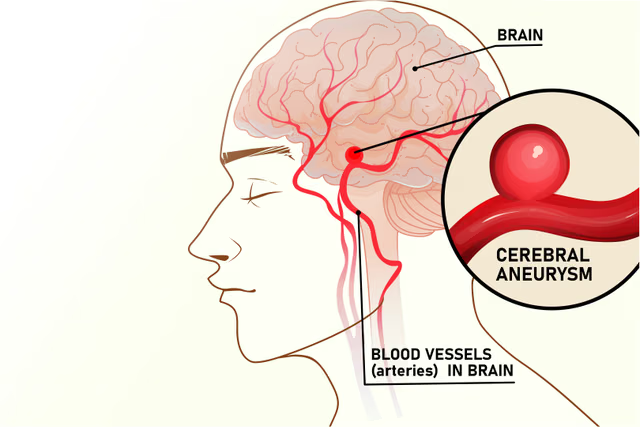
Most aneurysms are small and cause no symptoms at all. Many people live their whole lives with one and never know. The concern is that, occasionally, the thin wall can leak or burst — and a rupture causes bleeding around or into the brain (a subarachnoid haemorrhage), which is a medical emergency.
So there are really two very different situations to understand: the unruptured aneurysm, which is often silent and sometimes treatable in a planned way, and the ruptured aneurysm, which is a sudden emergency. The warning signs differ for each.
The emergency: signs of a ruptured aneurysm
If an aneurysm ruptures, symptoms come on suddenly and severely. Call emergency services immediately if you or someone near you has:
- A sudden, severe headache — very often described as “the worst headache of my life,” or a “thunderclap” headache that reaches full intensity within seconds
- A stiff neck
- Sudden nausea and vomiting
- Sensitivity to light
- Blurred or double vision
- A drooping eyelid
- Sudden confusion, difficulty speaking, or weakness
- Seizure
- Loss of consciousness
The defining feature is sudden and severe. A ruptured aneurysm is not something to observe at home — every minute matters, and getting to hospital fast genuinely changes outcomes.
The warning signs before a rupture
Here’s the part that’s less well known. Sometimes an aneurysm gives warning before a full rupture, in one of two ways:
1. A “sentinel” or warning leak. A small amount of blood can leak from the aneurysm days or weeks before a major rupture, causing a sudden, unusually severe headache that may ease but feels unlike any headache you’ve had before. This is easy to dismiss as a bad migraine — but a sudden severe headache that’s genuinely new for you should never be waved away.
2. Pressure symptoms from a growing aneurysm. A larger unruptured aneurysm can press on nearby nerves and structures before it ever bleeds, causing:
- A drooping eyelid
- A dilated (enlarged) pupil on one side
- Double vision or blurred vision
- Pain above or behind one eye
- Numbness on one side of the face
These pressure symptoms deserve prompt medical assessment — they can be the body’s early warning that an aneurysm is enlarging.
Who is at higher risk?
Aneurysms can occur in anyone, but some factors raise the risk:
- Family history — having a close relative (parent or sibling) with a brain aneurysm
- High blood pressure — one of the most important and most modifiable risks
- Smoking — a strong, well-established risk factor
- Age — more common over 40
- Sex — slightly more common in women
- Heavy alcohol use and stimulant drug use (cocaine, amphetamines)
- Certain inherited conditions, such as polycystic kidney disease and some connective tissue disorders
If brain aneurysms or sudden brain haemorrhages run in your family — particularly in more than one close relative — it’s worth mentioning to your doctor, as screening is sometimes recommended.
How a brain aneurysm is diagnosed
Because most unruptured aneurysms cause no symptoms, many are found incidentally — during a scan done for headaches, dizziness, or something unrelated. When an aneurysm is suspected or being assessed, diagnosis uses detailed imaging of the brain’s blood vessels:
- CT scan and CT angiography (CTA) — usually the first test, especially in an emergency, to detect bleeding and map the vessels.
- MRI and MR angiography (MRA) — detailed, radiation-free imaging often used to assess unruptured aneurysms.
- DSA (digital subtraction angiography) — the most detailed vessel imaging, sometimes used to plan treatment.
These scans tell the surgeon the aneurysm’s size, shape, and location — all of which determine whether and how it should be treated.
How brain aneurysms are treated
Not every aneurysm needs treatment. This surprises people, but it’s important: for small, low-risk unruptured aneurysms, the risk of an operation may outweigh the small risk of rupture, and careful monitoring with regular scans and blood-pressure control is sometimes the wisest course.
When treatment is recommended — either because an aneurysm has ruptured, or because an unruptured one is judged high-risk — there are two main approaches:
- Endovascular coiling (and flow diverters). A thin catheter is guided through the blood vessels, usually from the groin, up to the aneurysm. Tiny platinum coils are packed into the aneurysm to block blood flow into it, sealing it off from the inside. No opening of the skull is required.
- Surgical clipping. Through a neurosurgical procedure, a small titanium clip is placed across the neck of the aneurysm, closing it off from the circulation. This is a durable, long-established treatment.
The right choice depends on the aneurysm’s size, shape, and location, whether it has ruptured, and your overall health. A good neurovascular team will explain which option offers the best combination of safety and lasting protection for your specific case. You can read more on our aneurysm and AVM surgery page.
What you can do to lower your risk
You can’t change your family history, but you can meaningfully reduce risk — and the risk of rupture in a known aneurysm — by:
- Keeping blood pressure well controlled
- Not smoking (this is one of the most important steps)
- Moderating alcohol
- Avoiding stimulant drugs
- Attending follow-up scans if you have a known, monitored aneurysm
Frequently asked questions
No. Most unruptured aneurysms cause no symptoms and are found by chance on scans done for other reasons. Symptoms usually appear only if an aneurysm grows large enough to press on nearby structures, or if it leaks or ruptures.
A ruptured aneurysm classically causes a sudden, severe “worst headache of my life” that peaks within seconds. A warning leak can cause a similar sudden, unusually severe headache that’s unlike your normal headaches. Any sudden, severe, new headache needs urgent medical attention.
Often, yes. Endovascular coiling seals the aneurysm from inside the blood vessels using a catheter, with no skull incision. Surgical clipping is the other main option. The best approach depends on the aneurysm’s location and shape.
Are all brain aneurysms dangerous? Most never rupture. Whether one needs treatment depends on its size, shape, location, and your risk factors. Some small aneurysms are safely monitored rather than treated.
Is brain aneurysm treatment available in Bangalore? Yes. Diagnosis and both treatment options — coiling and clipping — are available in Bangalore at equipped neurosurgical centres.
When to seek help
Treat a sudden, severe, “worst-ever” headache as an emergency and get to hospital immediately — don’t wait to see if it passes. For non-emergency warning signs — a drooping eyelid, new double vision, one dilated pupil, or persistent pain behind one eye — see a neurosurgeon promptly for assessment. And if brain aneurysms run in your family, raise it with your doctor.
Get an expert opinion in Bangalore
If you’ve been told you have an aneurysm on a scan, have warning symptoms, or have a strong family history, a clear assessment can tell you whether you need treatment or careful monitoring. Book a Consultation · Send Reports on WhatsApp · +91 63802 71088
This article is for general information and is not a substitute for professional medical advice. A sudden severe headache or any emergency symptom needs immediate medical care.
2 Comments