If this is happening right now: Call 108 (ambulance) or 112 (national emergency) immediately. Note the exact time symptoms started or the injury happened. Do not give food, water or medicines. Get the person to the nearest hospital that can do an urgent CT scan of the brain.
A two-wheeler skid on Hosur Road. A fall from a ladder at home. A colleague at an Electronics City tech park who suddenly cannot lift her arm or get her words out. In these moments, what the people around do in the first hour often decides whether the patient walks out of hospital or lives with a lifelong disability.
Head injuries and strokes are among the most common brain emergencies we see at Bangalore Neuro Centre, Electronics City. With heavy traffic on Hosur Road, the elevated expressway, NICE Road and Sarjapur Road, and lakhs of people working in the IT parks around us, every family and workplace in South Bengaluru should know these first steps.
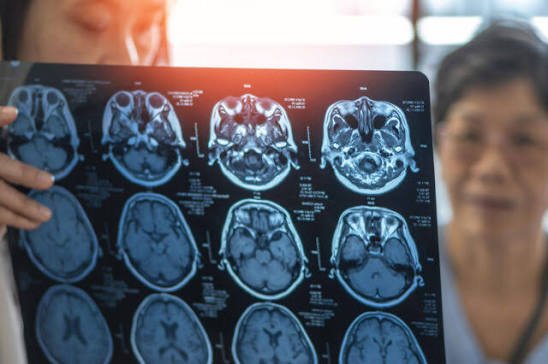
This guide explains, in simple language, how to recognise a head injury or stroke emergency, exactly what to do — and what not to do — in the first 60 minutes, and what happens once the patient reaches hospital.
Why the First Hour Matters So Much
Doctors call the period immediately after a serious injury or stroke the “golden hour”. Brain cells are extremely sensitive to loss of blood supply and to pressure.
- In a stroke, a blocked blood vessel starves part of the brain of oxygen. Research has estimated that during a major stroke the brain loses close to 2 million nerve cells every minute it goes untreated. This is why doctors say “time is brain.”
- In a head injury, bleeding inside the skull can build up pressure on the brain. A blood clot that is removed early can mean full recovery; the same clot found hours later can cause permanent damage or death.
The most powerful stroke treatments only work within strict time windows. Clot-dissolving medicine (thrombolysis) is generally given within about 4.5 hours of symptoms starting, and clot removal procedures (thrombectomy) are usually performed within 6 hours — and in carefully selected patients, up to 24 hours. Every minute lost at home, in traffic, or at a hospital that cannot do a CT scan reduces the chance of a good recovery.
Part 1: Stroke — Recognise It in Seconds
A stroke happens when blood flow to part of the brain is suddenly blocked (ischaemic stroke) or when a blood vessel in the brain bursts (haemorrhagic stroke, or brain haemorrhage). Both are emergencies.
Use BE FAST
| Letter | Check | What you may see |
|---|---|---|
| B — Balance | Sudden loss of balance? | Dizziness, staggering, unable to walk straight |
| E — Eyes | Sudden vision problems? | Blurred, double or lost vision in one or both eyes |
| F — Face | Ask them to smile | One side of the face droops |
| A — Arms | Ask them to raise both arms | One arm drifts down or cannot be lifted |
| S — Speech | Ask them to repeat a simple sentence | Slurred, strange or no words; cannot understand you |
| T — Time | Time to act | Call 108 immediately and note the time |
The NHS stroke symptoms guide is a useful reference on recognising stroke.
Other warning signs of stroke or brain haemorrhage
- Sudden, severe “worst-ever” headache, often described as a thunderclap — this can be a burst brain aneurysm (read more about brain aneurysm symptoms)
- Sudden numbness or weakness on one side of the body
- Sudden confusion or trouble understanding
- A seizure (fit) in someone with no history of epilepsy
- Vomiting with sudden headache or drowsiness
- Sudden loss of consciousness
Even if symptoms disappear within minutes, treat it as an emergency. A “mini-stroke” (transient ischaemic attack, or TIA) is often a warning that a major stroke may follow within hours or days.
Part 2: Head Injury — When Is It Serious?
Many bumps to the head are minor. But some injuries that look small on the outside hide dangerous bleeding inside the skull. In Electronics City, we see head injuries most often from two-wheeler accidents, pedestrian accidents, falls from height at construction sites, falls at home in elderly people, and sports injuries.
Go to hospital immediately (call 108) if there is:
- Any loss of consciousness, even for a few seconds
- Vomiting more than once
- A seizure or fit
- Drowsiness — hard to keep awake, or keeps falling asleep
- Confusion, strange behaviour, or not recognising people or places
- Severe or worsening headache
- Memory loss — cannot remember the accident or what happened just before it
- Weakness, numbness or difficulty walking
- Blurred or double vision, or one pupil larger than the other
- Clear fluid or blood coming from the nose or ears
- Bruising behind the ears or around both eyes (“panda eyes”)
- Slurred speech
- A deep wound or a dent in the skull
Extra caution for these people
Even a mild head injury needs a doctor’s assessment — and often a CT scan — if the person:
- Is over 65 years old
- Takes blood thinners (aspirin, clopidogrel, warfarin, apixaban, rivaroxaban and others)
- Has a bleeding disorder
- Has had previous brain surgery
- Was involved in a high-impact accident — hit by a vehicle, thrown from a two-wheeler, fell from more than about one metre or five stairs
- Is a young child, especially a baby
The “talk and deteriorate” danger
Some patients with bleeding between the skull and the brain (an extradural haematoma) seem fine for a few hours after the injury — talking, walking, even going home. Then they suddenly become drowsy and collapse as the clot grows. This is called a lucid interval. It is the reason we say: after a significant head injury, “looks fine” is not the same as “is fine.” Get a medical assessment.
The NHS guide to head injury and concussion also lists symptoms that need urgent care.
Part 3: What to Do in the First Hour — Step by Step
Minute 0–5: Stay safe and call for help
- Make the scene safe. On a road, switch on hazard lights, wave down traffic, and keep yourself out of danger. Do not become a second casualty.
- Call 108 or 112. Say clearly: the location (landmark, road name, tech park gate number), what happened, how many people are hurt, and whether the person is conscious and breathing.
- Note the time. For a stroke, note the time the person was last seen normal. For an injury, note the time of the accident. Doctors will ask — this decides which treatments are possible.
Minute 5–15: Check breathing and position
- Check if they are responsive. Speak loudly and tap their shoulders.
- Check breathing. Look at the chest for up to 10 seconds.
- Not breathing normally: start chest compressions (CPR) if you know how, and follow the ambulance operator’s instructions on the phone.
- Breathing but unconscious: if there is no suspected neck or spine injury, turn them gently onto their side (recovery position) so vomit does not block the airway.
- Protect the neck after any accident or fall. Assume a spine injury in any road accident, fall from height or unconscious patient. Keep the head and neck still and in line with the body. Move them only if they are in immediate danger (fire, oncoming traffic) or if they are vomiting and choking — and then roll the head, neck and body together as one unit.
- Do not remove a motorcycle helmet unless the person is not breathing or is choking and you cannot otherwise clear the airway. Removing a helmet wrongly can worsen a neck injury.
Minute 15–30: Control bleeding and keep them still
- Control bleeding with a clean cloth and firm, steady pressure. If you feel a dent or broken bone in the skull, press around the wound rather than directly on it.
- Keep the person still, warm and calm. Loosen tight clothing around the neck.
- Stay with them. Watch breathing, colour and alertness. Note any seizure, vomiting or change in consciousness to tell the doctors.
Minute 30–60: Get to the right hospital
- Choose a hospital with a 24-hour emergency department, CT scan and neurosurgery support — not just the closest small clinic. Ambulance teams usually know the right hospitals in the area. A patient taken first to a centre that cannot do a CT scan often loses precious time being transferred.
- Call ahead if possible so the emergency team is ready.
- Carry what you can: the person’s phone, ID, list of medicines (especially blood thinners), and any known medical history. If you are a family member, bring previous scans and records.
What NOT to Do
These common mistakes can cause serious harm:
- ❌ Do not give aspirin or any medicine for a suspected stroke. Some strokes are caused by bleeding, and aspirin can make bleeding worse. Only a CT scan can tell the difference.
- ❌ Do not give food, water or tea. Stroke and head injury patients often cannot swallow safely and may choke.
- ❌ Do not prick the fingers or ears to “release blood”, rub oils, or try home remedies. These are myths and waste critical time.
- ❌ Do not let them “sleep it off” after a significant head injury without a doctor’s assessment.
- ❌ Do not wait to see if symptoms improve. If in doubt, go.
- ❌ Do not drive the patient yourself through heavy traffic if an ambulance can reach faster — paramedics can begin care on the way and alert the hospital.
What Happens at the Hospital
1. Emergency assessment
The emergency team checks airway, breathing and circulation, blood pressure, blood sugar and level of consciousness (Glasgow Coma Scale). A low blood sugar can mimic a stroke, so this is checked immediately.
2. Urgent CT scan of the brain
This is the most important test. Within minutes, a CT scan shows whether there is:
- Bleeding inside or around the brain
- A skull fracture
- Swelling of the brain
- Signs of a stroke caused by a blocked vessel
3. Treatment decided by what the scan shows
For a stroke caused by a blocked artery (ischaemic stroke):
- Clot-dissolving medicine (thrombolysis) if the patient arrives within the time window
- Clot removal through a catheter (mechanical thrombectomy) for large blocked vessels in suitable patients
- Admission to a stroke unit or ICU
For a brain haemorrhage (haemorrhagic stroke):
- Blood pressure control and reversal of blood thinners
- Neurosurgical surgery to remove a large blood clot or relieve pressure, when needed
- Treatment of the cause — for example, a burst aneurysm or AVM, which may need aneurysm and AVM surgery or endovascular coiling
For head injury:
- Observation and repeat scans for mild injuries
- Emergency surgery (craniotomy) to remove a blood clot pressing on the brain
- Decompressive craniectomy — temporarily removing part of the skull to let a swollen brain expand safely
- Pressure monitoring and intensive care for severe injuries
- Repair of depressed skull fractures
Learn more about our head injury and neurotrauma care. Accidents that also injure the spine may need spine trauma fixation.
Road Accident Victims: Know Your Rights in India
Many bystanders hesitate to help accident victims because they fear police questioning or hospital bills. You should know:
- Good Samaritans are protected by law. Under the Motor Vehicles Act, a person who helps an accident victim in good faith cannot be held liable, and hospitals cannot detain them or demand payment from them. Sharing your name with police is voluntary.
- Cashless emergency treatment for road accident victims. In February 2026, the Government of India launched the PM RAHAT scheme, which provides cashless treatment of up to ₹1.5 lakh per victim for 7 days from the date of the accident at designated hospitals. Ask the hospital’s emergency or billing desk whether the scheme applies.
Be Prepared: A Checklist for Families and Workplaces in Electronics City
- ☑ Save 108 and 112 on every family member’s phone
- ☑ Know your nearest hospital with 24-hour emergency, CT scan and neurosurgery — before you need it
- ☑ Keep a list of medicines (especially blood thinners) and medical conditions for elderly parents, in their wallet or phone
- ☑ Learn basic first aid and CPR
- ☑ Always wear an ISI-marked helmet, fastened properly, on two-wheelers — for both rider and pillion
- ☑ Fall-proof homes for elderly family members — grab bars in bathrooms, non-slip mats, good lighting at night
- ☑ Control stroke risk factors — blood pressure, diabetes, cholesterol, smoking and alcohol
After the Emergency: When to See a Neurosurgeon
Some problems appear days or weeks after a head injury, especially in elderly people and those on blood thinners. A slow-growing clot called a chronic subdural haematoma can develop weeks after even a minor fall and can look like dementia or a stroke. See a doctor urgently if, after a head injury, there is:
- Increasing headache over days or weeks
- New confusion, forgetfulness or personality change
- Weakness on one side or new difficulty walking
- Drowsiness or repeated vomiting
These problems are very treatable when caught early. Our article on neurosurgery in elderly patients explains why age alone should not stop a family from seeking treatment.
Emergency and Follow-up Care at Bangalore Neuro Centre, Electronics City
Dr. Shyam D is the consultant neurosurgeon at Manipal Hospital Electronics City, with more than 10 years of experience and over 3,000 surgical procedures. He trained in complex cerebrovascular surgery in Japan and advanced skull base surgery at Weill Cornell, USA, and treats the full range of brain emergencies — head injuries, brain haemorrhages, burst aneurysms and spine trauma.
Bangalore Neuro Centre, Electronics City serves patients from Electronics City, Hosur Road, Bommasandra, HSR Layout, Bommanahalli and Sarjapur Road. Read more about our neurosurgeon in Electronics City services.
In an emergency: call 108 and go to the nearest emergency department immediately.
For follow-up after a head injury or stroke, or a second opinion on a CT or MRI scan: call or WhatsApp +91 63802 71088, or book a consultation with Dr. Shyam D at Manipal Hospital Electronics City.
Frequently Asked Questions
Call 108 or 112 immediately, note the time the person was last seen normal, keep them lying on their side if drowsy, and give nothing by mouth. Get them to a hospital that can do an urgent CT scan.
No. Some strokes are caused by bleeding in the brain, and aspirin can make them worse. Only a CT scan can show the type of stroke.
Clot-dissolving treatment is generally given within about 4.5 hours of symptoms starting, and clot removal procedures are usually done within 6 hours, extending to 24 hours in selected patients. The sooner treatment starts, the better the outcome.
Go to hospital immediately if there is loss of consciousness, repeated vomiting, a seizure, drowsiness, confusion, worsening headache, weakness, fluid from the nose or ears, or if the person is elderly or on blood thinners.
Yes. Bleeding inside the skull can grow slowly, and some patients seem normal for hours before suddenly deteriorating. Any significant head injury should be assessed by a doctor.
Should I remove a helmet after a bike accident?
No, unless the person is not breathing or is choking and you cannot otherwise clear the airway. Removing a helmet incorrectly can worsen a neck injury.
Will I get into trouble for helping an accident victim?
No. Good Samaritans are protected by law in India. Hospitals cannot detain you or ask you to pay, and you are not obliged to give your details.
This article is for general awareness and first-aid guidance only. It does not replace professional emergency care or formal first-aid training. In any emergency, call 108 or 112 immediately.
1 Comment